

Cybersecurity for Your Finances: How to Spot Fake Bank and Investment Fraud Alerts
What would you do if someone called or texted you claiming your money was at risk and you needed to move it right away? Your first instinct might be to act quickly to protect your savings. But that’s exactly what scammers are counting on. If you receive an unexpected warning about suspicious activity on your account, don’t transfer money or share a login verification code. Instead, end the conversation and contact your bank, brokerage firm, or financial advisor using a trusted phone number, such as the one on your account statement. The Federal Trade Commission (FTC) warns that anyone telling you to move money into a “safe” account is trying to scam you.¹
For Michigan families, professionals, and retirees, protecting financial accounts is an important part of protecting long-term financial goals. An urgent message about your savings or investments can be unsettling, especially when it sounds convincing. The good news? You don't have to figure out whether a message is legitimate while you're on the phone with a stranger. Taking a moment to verify the situation can make all the difference. This blog post will take a look at how fake bank fraud alerts work, the warning signs to watch for, and what you can do to keep your money safe.
What Is a Fake Bank or Investment Fraud Alert?
A fake fraud alert is a call or message from someone pretending to represent your bank, brokerage firm, or another financial institution. They claim there's suspicious activity on your account and say they need to help you protect your money. But instead of protecting your funds, they're trying to get you to transfer money yourself or share information that gives them access to your account.
Imagine receiving a text like this: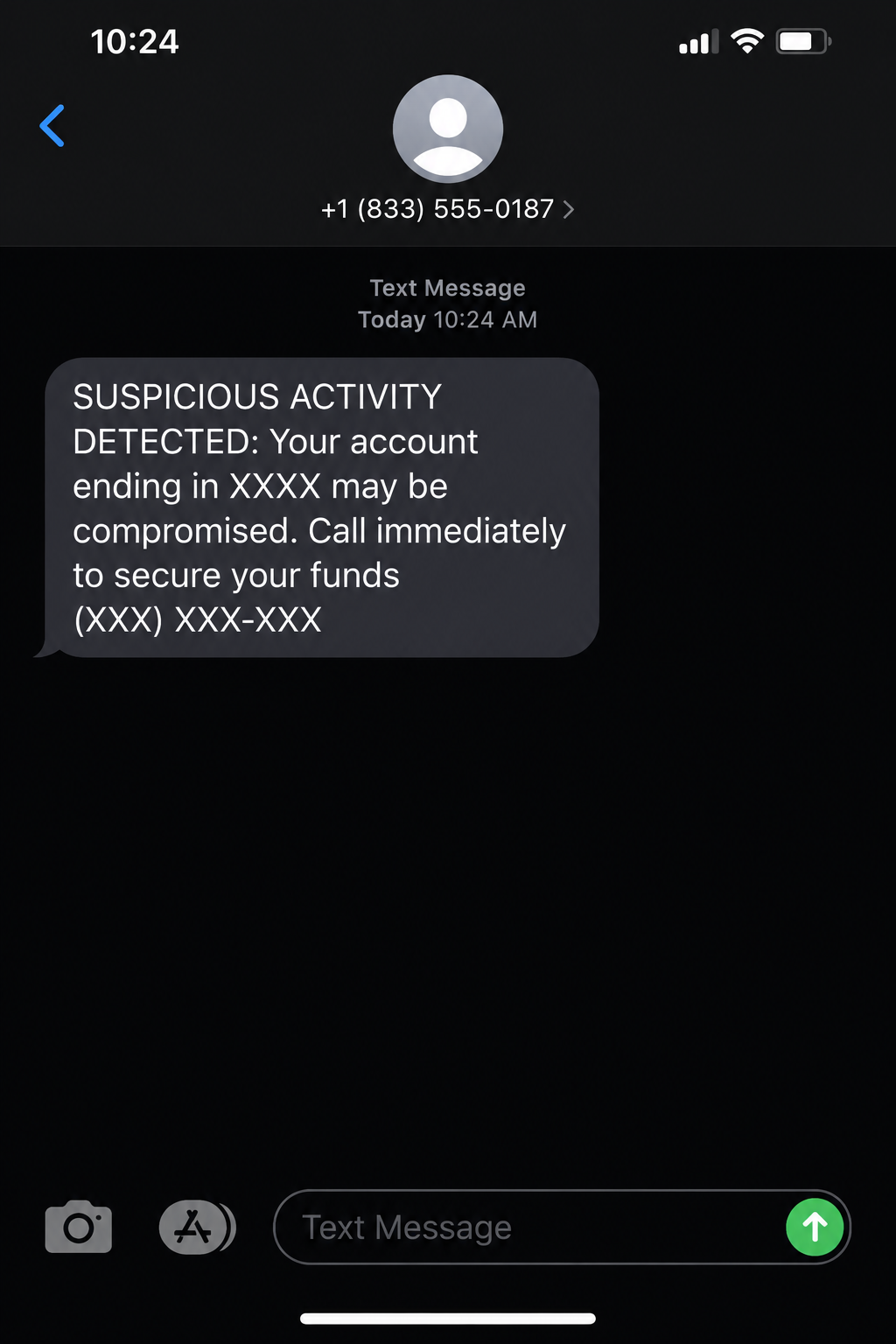
At first glance, the message might seem legitimate. After all, most of us would want to know if someone were trying to access our money.
Scammers take advantage of that concern by creating a sense of urgency. They want you to feel like you need to act immediately, before you have time to stop and question the message. The scam might start with a text, phone call, or email warning you about suspicious activity. The person may even pose as a bank fraud specialist and sound knowledgeable about how financial accounts work. Eventually, they'll ask you to take action, such as transferring your money to a supposedly secure account or sharing a verification code. You may think you're following instructions to protect your savings, when you're actually giving a scammer access to them.
Here's the biggest red flag: Someone is telling you to move your money to keep it safe. A legitimate security concern should be verified directly with your financial institution, not through the instructions provided by an unexpected caller or message.
Four Red Flags You Shouldn’t Ignore
1. You’re told to move money to a “safe” account
A caller might claim your checking, savings, or investment account has been compromised and that transferring your balance is the only way to prevent a loss. It may sound like a reasonable precaution, especially if the person seems knowledgeable and convincing. But don't make that transfer. The FTC warns that scammers may impersonate banks or government agencies and tell you to move money to protect it. Requests to withdraw cash, purchase gift cards, or send cryptocurrency are also major warning signs.2
If someone tells you to move your money, stop and contact your financial institution directly.
2. Someone asks for your verification code
If you've ever received a text message with a code to confirm your identity, you know how routine it can seem. Scammers take advantage of that familiarity. A fraudster may ask you to read a code aloud or forward it to them, claiming it's needed to secure your account. In reality, that code could help them sign in as you or bypass an account security measure. Never share a login verification code with someone who contacts you unexpectedly, even if they claim to work for your bank or investment company.
3. The caller insists you must act immediately
When someone tells you your savings are at risk, it's natural to want to fix the problem as quickly as possible. Scammers use that fear to push you into making decisions before you have time to think them through. They might warn that your account will be frozen, your money will disappear, or you'll lose your chance to prevent fraud if you don't act right away. Rather than rushing, take a step back. Pressure to act immediately is a reason to pause, not a reason to hurry. End the conversation and verify the situation with your financial institution.
4. You’re directed to use a number supplied in the warning
A text may include a phone number to call for help, or a caller may give you a number for their supposed fraud department. The problem? That number could connect you directly to the scammer. Instead of using the contact information in the message, look up your financial institution's number independently. You can find it on your account statement, your bank card, or the institution's official website. This gives you a reliable way to find out whether there's actually a problem with your account.
Can These Scams Target Investment and Retirement Accounts?
Yes. These scams aren't limited to checking and savings accounts. They can also target brokerage accounts and retirement savings. A scammer might claim that suspicious activity has put your investments at risk or that you need to move funds immediately to prevent a financial loss. For someone who has spent years building retirement savings, that kind of warning can be especially alarming. Whether you're managing your household finances, investing for the future, or preparing for retirement, the same rule applies: Don't follow unexpected instructions to move money or provide account access.
If someone contacts you about a potential problem with your investments, reach out to your brokerage firm or financial advisor using contact information you already trust. They can help you determine whether the warning is legitimate and what steps, if any, you should take.
A Simple Response: Pause, Hang Up, Verify
You don't have to determine whether a caller is trustworthy while they're still on the phone. Give yourself time to check the facts.
If you receive a suspicious account warning, follow these steps:
- End the conversation. Do not transfer money or share a verification code.
- Find your financial institution’s contact information independently, such as on your statement.
- Call the institution directly and ask whether there is a genuine issue with your account.
- Tell the real fraud department about the suspicious message or call.
The key word is verify. A familiar company name, a convincing caller, or an urgent warning doesn't necessarily mean the message is legitimate.
Already Shared Information or Sent Money? Act Quickly
If you've already responded to a suspicious message, don't panic or blame yourself. These scams are designed to sound convincing, and acting quickly now can help limit further damage.
Here's where to start:
- Contact your financial institution immediately. Explain what happened, especially if you transferred money or shared a verification code. Ask what steps you should take to secure your account.
- Ask whether the transaction can be stopped or reversed. If you sent money, contact your bank or payment provider as soon as possible. A reversal or refund isn't guaranteed, but it's worth asking.
- Report the scam. You can file a report with the FTC at ReportFraud.ftc.gov. Depending on the circumstances, you may also report it to the FBI's Internet Crime Complaint Center www.IC3.gov, your state attorney general, or local law enforcement.
If you shared login information, ask your financial institution how to secure your account and whether you should change your password or take additional security measures.
Protecting Your Finances Means Taking Time to Check
You've worked hard to build your savings, prepare for retirement, and create financial security for yourself and your family. An unexpected fraud warning can make those goals feel threatened in an instant. But you don't have to let fear dictate your next move. This October, make one simple habit part of your financial routine: Verify before you act. If someone contacts you unexpectedly and says your money needs to be moved to keep it safe, end the conversation and contact your financial institution directly.
Taking a moment to confirm what's really happening can help you avoid a costly mistake and keep your financial goals on track.
Talk to an advisor More information on preventing fraud
1. https://consumer.ftc.gov/comment/199150
2. https://consumer.ftc.gov/consumer-alerts/2024/03/never-move-your-money-protect-it-thats-scam